

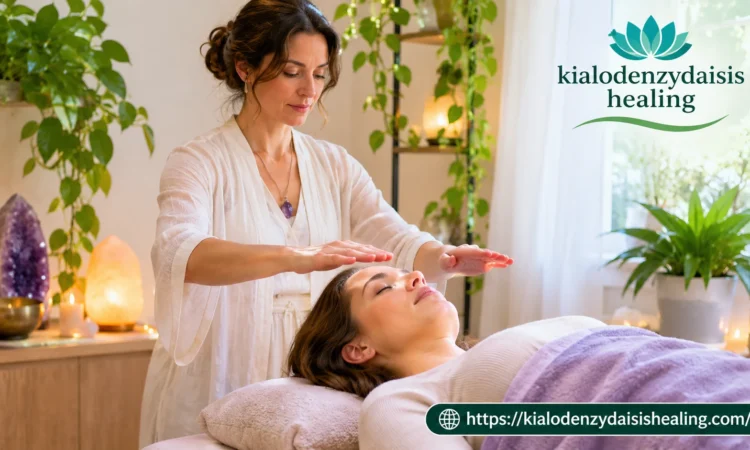
Reiki healing has become a popular topic among people interested in relaxation, mindfulness, and complementary wellness practices. Some people explore it to manage everyday stress, while others are curious about its spiritual background, healing techniques, and traditional symbols.
But what exactly is Reiki healing? How does it work, what does the word Reiki mean, and are its reported benefits supported by scientific research?
Reiki is a Japanese complementary practice that involves a practitioner placing their hands lightly on or just above another person’s body. The practice is based on the belief that a form of universal life energy supports the body’s natural healing abilities. Although practitioners describe several potential benefits, scientific research has not established that Reiki can treat or cure medical conditions.
Understanding its origins, techniques, and limitations helps readers make informed decisions about complementary wellness approaches.
This guide from Kialodenzydaisis Healing explains what Reiki healing means, explores its traditional symbols, compares Reiki with Pranic Healing, and discusses what current research actually says.
What Is Reiki Healing?
Reiki is a Japanese energy-based wellness practice developed into its modern form during the early twentieth century. The practice is commonly associated with Mikao Usui, who established the Usui Reiki Ryoho system in Japan during the 1920s.
The word Reiki is generally explained through two Japanese characters:
- Rei: Often translated as universal, spiritual, or higher wisdom.
- Ki: Commonly translated as life energy or vital energy.
Together, the term is often interpreted as universal life energy.
In traditional Reiki philosophy, this energy is believed to flow through living beings. Practitioners believe that Reiki sessions can help balance this energy and encourage relaxation and well-being.
A typical session involves a person sitting or lying comfortably while the practitioner places their hands on specific areas or holds them slightly above the body.
Importantly, the proposed energy mechanism has not been scientifically established. Reiki is considered a complementary practice rather than a replacement for conventional healthcare.
The History Behind Reiki Healing
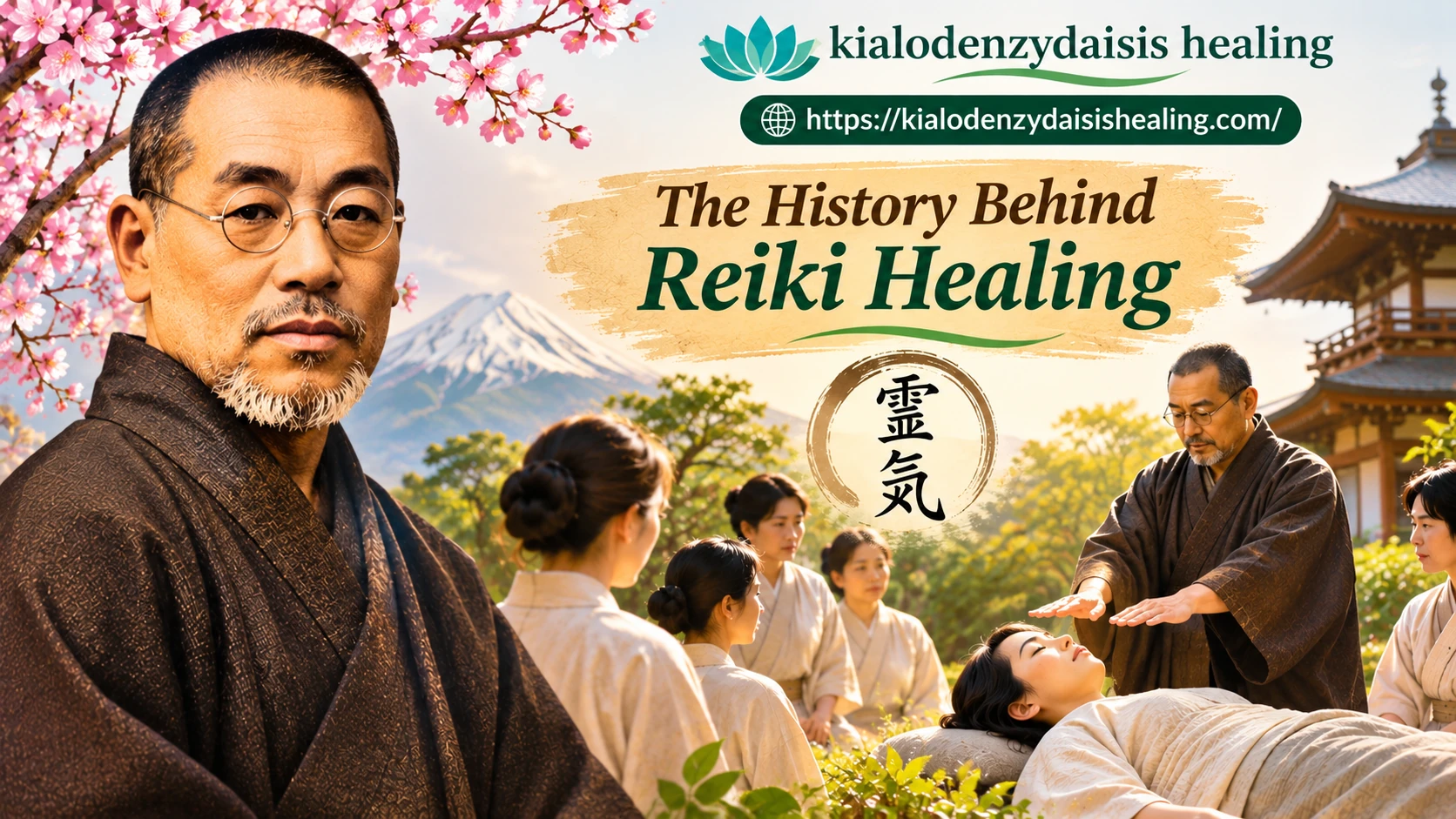
Modern Reiki is associated with Mikao Usui, a Japanese spiritual teacher who developed his system during the early twentieth century.
The practice gradually spread through his students and later reached other countries through teachers who introduced Reiki training internationally.
Over time, different Reiki traditions and teaching methods developed. Today, practitioners may follow Usui Reiki or other branches that have adapted its original techniques.
Although the practice has evolved, its central ideas commonly include mindfulness, compassion, personal development, and the belief in universal life energy.
What Makes Reiki Healing Different From Other Wellness Practices?
Reiki differs from many conventional wellness activities because it focuses on a proposed energy-based approach rather than physical exercise, nutritional changes, or structured psychological techniques.
Some of its distinctive characteristics include:
Gentle hand placement: Practitioners place their hands lightly on or above different areas of the body.
Relaxation-focused environment: Sessions generally take place in a quiet setting where individuals can rest comfortably.
Spiritual philosophy: Traditional Reiki teachings involve the concept of universal life energy.
Individual experience: People may describe different sensations during a session, including warmth, calmness, or relaxation. These experiences are subjective and do not demonstrate that energy has been transferred.
Non-invasive approach: Reiki generally does not involve medication, injections, or physical manipulation.
These characteristics make Reiki different from practices such as massage therapy, meditation, and Pranic Healing.
Reiki Healing Benefits: What Can People Expect?
People explore Reiki for different personal reasons. Some are interested in relaxation, while others want to include complementary wellness activities in their daily routines.
However, it is important to distinguish between reported experiences and scientifically established health benefits.
The National Center for Complementary and Integrative Health (NCCIH) states that Reiki has not been clearly demonstrated to be effective for any health-related purpose. Research has examined areas such as pain, anxiety, and depression, but findings remain inconsistent.
Some people report the following experiences:
1. Relaxation and Calmness
A quiet environment and a period of uninterrupted rest may help someone feel more relaxed.
People who enjoy meditation or other calming activities may find the peaceful atmosphere of a Reiki session appealing.
2. Stress Management
Some individuals use Reiki as part of their personal approach to managing everyday stress.
However, there is not enough reliable evidence to establish Reiki as an effective treatment for stress-related medical conditions.
3. Emotional Well-Being
People sometimes describe feeling peaceful or emotionally refreshed after a session.
These experiences can vary between individuals and should not be interpreted as proof that Reiki treats anxiety, depression, or other mental health conditions.
4. Mindfulness and Self-Awareness
Reiki sessions may provide an opportunity to pause, rest, and pay attention to personal experiences.
For people interested in mindfulness, this quiet time may encourage greater awareness of their emotional and physical state.
5. Complementary Wellness Support
Some people include Reiki alongside other activities such as gentle movement, meditation, and healthy lifestyle habits.
It should remain complementary and must not replace medical treatment or professional healthcare advice.
How Does a Reiki Healing Session Work?
A Reiki session usually follows a simple process designed to create a comfortable and peaceful experience.
Although individual practitioners may use different methods, a typical session includes the following stages.
Step 1: Initial Conversation
The practitioner discusses the session, explains the approach, and asks about the individual’s comfort and preferences.
Step 2: Preparing the Environment
The person sits or lies down in a quiet space. Comfortable clothing is generally worn throughout the session.
Step 3: Hand Positions
The practitioner places their hands lightly on agreed areas or holds them just above the body.
Touch should always be explained and agreed upon. A person can request a no-touch session.
Step 4: Relaxation Period
The individual remains comfortable while the practitioner follows their preferred Reiki hand-position sequence.
Some people listen to quiet music, while others prefer silence.
Step 5: Closing the Session
The practitioner finishes the session and allows the person time to return to their usual activities.
A session should never involve pressure to purchase expensive treatments, stop medication, or accept unsupported medical claims.
Reiki Symbols for Healing and Their Meanings
Reiki symbols are important elements in several traditional Reiki teaching systems, particularly in Usui Reiki.
Practitioners use these symbols as part of their training and may draw, visualize, or mentally focus on them during specific practices.
The symbols are traditionally associated with different intentions. Their proposed energetic effects have not been scientifically demonstrated.
The following are four commonly discussed symbols in Usui Reiki traditions.
1. Cho Ku Rei – Power Symbol
Cho Ku Rei is commonly known as the power symbol.
In Reiki teachings, practitioners associate it with focusing or emphasizing Reiki energy during a session.
It is traditionally used when a practitioner wants to concentrate their attention on a particular area or intention.
2. Sei Hei Ki – Mental and Emotional Symbol
Sei Hei Ki is often described as the mental and emotional symbol.
Within traditional Reiki teachings, it is associated with emotional balance, inner awareness, and mental well-being.
Practitioners may use it during sessions intended to encourage a sense of calmness.
3. Hon Sha Ze Sho Nen – Distance Symbol
Hon Sha Ze Sho Nen is commonly known as the distance symbol.
Some Reiki traditions associate it with sending Reiki beyond physical distance or connecting with experiences across time.
These are spiritual beliefs within the practice, not scientifically established methods of transmitting energy.
4. Dai Ko Myo – Master Symbol
Dai Ko Myo is commonly called the master symbol.
It is associated with advanced Reiki training and spiritual development in several Usui Reiki traditions.
Its use and teaching requirements can differ between Reiki lineages.
The names, drawings, and interpretations of Reiki symbols may vary across schools. Readers interested in learning them should consult a qualified Reiki teacher rather than assuming every online representation follows the same tradition.
Pranic Healing vs Reiki: What Is the Difference?
Pranic Healing and Reiki are two complementary energy-based practices. Both involve traditional beliefs about life energy, but their approaches and techniques differ.
Pranic Healing is associated with the teachings of Master Choa Kok Sui, while modern Reiki is associated with Mikao Usui and the Japanese Usui Reiki tradition.
| Feature | Reiki | Pranic Healing |
|---|---|---|
| Origin | Japan | Developed by Master Choa Kok Sui |
| Main concept | Universal life energy | Prana or life energy |
| Common technique | Hand placement or hovering | Scanning, cleansing, and energizing |
| Physical contact | Light touch or no touch | Generally no touch |
| Training | Varies by Reiki lineage | Follows a structured training system |
| Symbols | Used in several Reiki traditions | Uses its own methods and techniques |
Which Practice Is Better?
There is no scientifically established answer suggesting that one practice is medically superior to the other.
People interested in these approaches may consider their personal preferences, the practitioner’s training, session methods, and comfort level.
Neither Reiki nor Pranic Healing should be used to diagnose diseases or replace evidence-based medical treatment.
How to Get Started With Reiki Healing
People interested in Reiki can begin by learning about its philosophy and understanding what happens during a session.
A practical beginner’s approach includes:
- Learn the basics: Understand Reiki’s Japanese origins, traditional philosophy, and common techniques.
- Research different traditions: Explore Usui Reiki and other recognized teaching approaches.
- Find a responsible practitioner: Look for someone who explains their training, experience, and session methods clearly.
- Discuss personal preferences: Ask whether the session involves touch, hovering hands, or a combination of both.
- Set realistic expectations: Approach Reiki as a complementary wellness experience rather than a medical treatment.
- Evaluate the experience: Consider whether the session felt comfortable and whether the approach suits personal wellness preferences.
Anyone with health concerns should continue receiving appropriate care from qualified healthcare professionals.
Useful Tips for a Positive Reiki Experience
A few simple considerations can help people make informed decisions before attending a session.
- Choose a comfortable and respectful environment.
- Wear clothing that allows comfortable movement and relaxation.
- Ask questions about the practitioner’s training.
- Discuss boundaries and consent before the session begins.
- Avoid practitioners who promise guaranteed cures.
- Do not discontinue prescribed medication because of Reiki recommendations.
- Remember that personal experiences differ.
A responsible practitioner should respect individual boundaries and clearly explain the limitations of the practice.
Common Myths and Misconceptions About Reiki
Several misconceptions surround Reiki healing, particularly because its traditional energy concepts are sometimes presented as established scientific facts.
Myth 1: Reiki can cure every disease.
There is no reliable clinical evidence establishing Reiki as a cure for diseases. It should not replace medical treatment.
Myth 2: Everyone experiences the same sensations.
People may experience different feelings during a session, and some may notice nothing unusual.
Myth 3: Reiki is the same as massage therapy.
Reiki generally involves hand placement or hovering hands rather than the muscle manipulation used in massage.
Myth 4: Reiki symbols have scientifically proven powers.
Symbols have traditional meanings within Reiki practice, but their proposed energetic effects have not been scientifically verified.
Myth 5: Reiki and Pranic Healing are identical.
Both involve energy-based beliefs, but their origins, techniques, and training systems differ.
Is Reiki Healing Supported by Scientific Research?
Scientific research on Reiki has examined its possible relationship with pain, anxiety, depression, and general well-being.
However, the available evidence has important limitations.
According to the NCCIH, studies have generally been inconsistent, and there is no scientific evidence supporting the existence of the energy field believed to play a role in Reiki.
A systematic review published in PubMed also identified limitations in earlier clinical trials, including small sample sizes and methodological problems.
This does not mean that people cannot find a Reiki session relaxing. It means that personal experiences should not be confused with proof of a specific medical effect.
The safest approach is to consider Reiki a complementary wellness practice and rely on established healthcare for diagnosing and treating medical conditions.
How to Make Reiki Part of a Balanced Wellness Routine
For people interested in exploring Reiki, the practice can be considered alongside other established lifestyle habits.
A balanced wellness routine may include:
- Regular physical activity suitable for individual abilities.
- Consistent and sufficient sleep.
- Balanced nutrition and hydration.
- Mindfulness or meditation.
- Healthy social connections.
- Appropriate medical check-ups when needed.
These habits support general health independently of Reiki.
Combining relaxation activities with evidence-informed lifestyle choices provides a more realistic approach to personal well-being than relying on any single healing method.
Conclusion
Reiki healing is a Japanese complementary wellness practice based on the traditional belief in universal life energy. Its techniques generally involve gentle hand placement or hovering hands, while traditional symbols represent different intentions within various Reiki teaching systems.
The potential benefits of Reiki are often described in terms of relaxation, calmness, and personal well-being. However, current scientific evidence has not established Reiki as an effective treatment for medical conditions or verified its proposed energy mechanism.
Understanding the difference between traditional beliefs, personal experiences, and scientific evidence helps readers make responsible choices.
Kialodenzydaisis Healing encourages readers to explore wellness practices with curiosity while maintaining realistic expectations and prioritizing evidence-based healthcare.
Frequently Asked Questions
1. What is Reiki healing in simple words?
Reiki is a Japanese complementary wellness practice in which practitioners place their hands lightly on or just above another person’s body. It is based on the traditional belief in universal life energy.
2. What does Reiki healing mean?
Reiki healing generally refers to a practice intended to balance or support the flow of universal life energy. Its proposed energy mechanism has not been scientifically established.
3. What are the main benefits of Reiki healing?
Some people report relaxation, calmness, and improved subjective well-being after sessions. However, reliable research has not established specific medical benefits.
4. What are the four main Reiki symbols?
Four commonly discussed symbols in Usui Reiki are Cho Ku Rei, Sei Hei Ki, Hon Sha Ze Sho Nen, and Dai Ko Myo. Their interpretations vary across teaching traditions.
5. What is the difference between Reiki and Pranic Healing?
Reiki commonly uses light hand placement or hovering hands, while Pranic Healing generally follows a no-touch approach involving scanning, cleansing, and energizing.
6. Can beginners learn Reiki healing?
Yes. People can learn about Reiki through introductory courses and qualified teachers. Training structures and requirements vary between Reiki traditions.
7. Does Reiki healing involve physical touch?
It can, but physical contact is not essential. Practitioners may hold their hands slightly above the body instead. Touch should always require consent.
8. Is Reiki healing scientifically proven?
No. Current evidence does not establish Reiki as an effective treatment for any specific medical condition, and the proposed energy field has not been scientifically demonstrated.
9. How long does a Reiki session last?
Session lengths vary between practitioners. Many offer sessions lasting approximately 30–60 minutes, although there is no universal standard.
10. Can Reiki replace conventional medical treatment?
No. Reiki should not replace medical diagnosis, prescribed medication, or necessary healthcare. People experiencing health concerns should consult qualified healthcare professionals.




[…] healing and traditional energy healing share some similarities, particularly their interest in the […]
[…] Emotional healing focuses on improving psychological well-being after stressful or difficult experiences. […]